


Ihr kostenloser Branchen-Newsletter

Lassen Sie sich von unseren Fachjournalisten einmal wöchentlich über die wichtigsten aktuellen Entwicklungen der Taxi-Branche informieren, bequem direkt in Ihre Mailbox.
Aktueller Termin

Meist gelesen
Robotaxis in Paris from 2028: Will autonomous vehicles be a competitor to taxi companies?
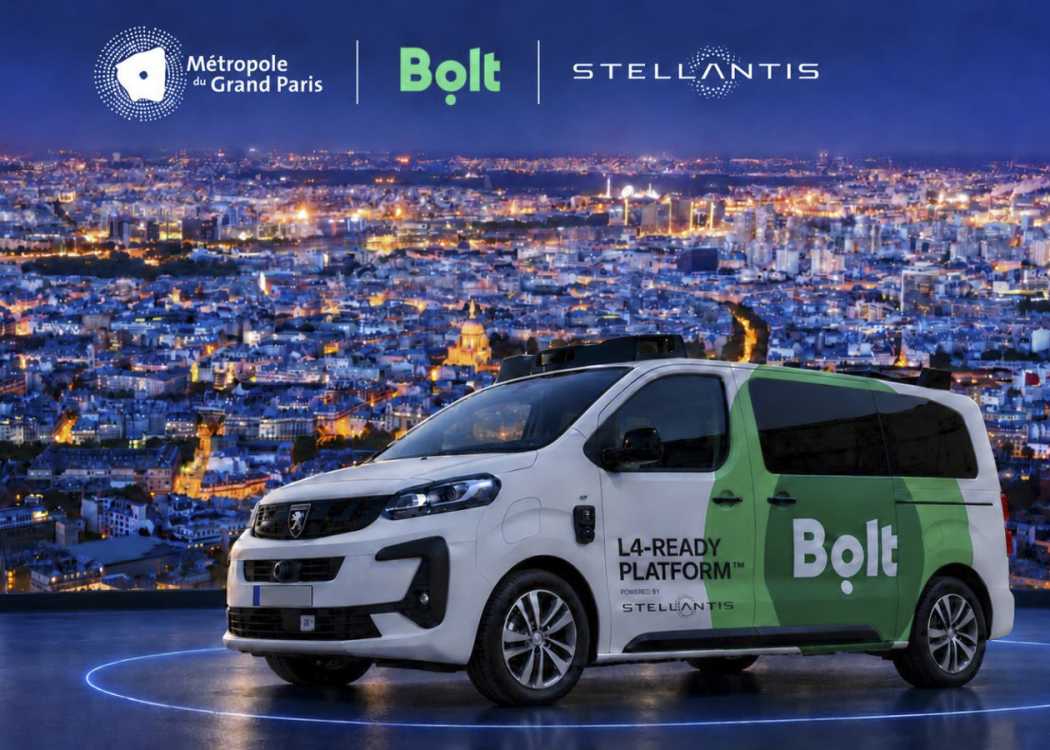
An autonomous taxi, ordered via an app and integrated into a large mobility platform: In the Greater Paris area, this model is set to go into service from 2028.
The mobility provider Bolt, the carmaker Stellantis, and the Métropole du Grand Paris have announced a joint pilot project for this. It is still just a plan, but the division of roles shows how the market for passenger transport could change: Bolt organizes the customer access and the operation, Stellantis supplies the vehicles, a specialized technology partner is to enable autonomous driving. However, Bolt does not only act as an intermediary, but also wants to integrate autonomous vehicles into its mobility platform. This could allow another provider to compete for passengers who today use taxis or rental cars. Whether and to what extent this will actually happen, however, depends on the results of the trials, the permissions, and the later business model.
Test first, then expand
The trial is planned to begin in 2028 in up to five municipalities in the northwestern part of the Paris metropolitan area. By 2030, an expansion to more than 30 municipalities is planned. Commercial operation is subject to the required approvals. Pony.ai has been named as a potential provider of autonomous driving technology. The technology is expected to be based on NVIDIA Hyperion and the NVIDIA Halos safety system. Initially, the aim is to integrate the vehicles into the existing traffic. Among other things, they are to cover the first and last mile, better connect commercial and office locations, and take on trips outside peak times. The Métropole du Grand Paris intends to examine operational safety, service quality, user acceptance, and economic impacts.
For taxi companies, it is crucial to determine which assignments the autonomous vehicles should take on in the future. If they are deployed where taxis are currently scarce, they could unlock additional demand. If, on the other hand, they serve the same routes and customer groups as traditional taxis, immediate competition arises. The announcement leaves this question open.
“Autonomous vehicles will only play a role if they solve real traffic problems,” emphasizes Bolt founder and CEO Markus Villig. “In the Greater Paris area, we are working with local authorities and our partners to build a joint service tailored to local needs—from linking people to public transport to handling trips that are currently harder to manage.”
Bolt brings the customer platform and operating experience; the partners bring the vehicle and driving technology, according to Villig. This is another concrete step toward a Europe-wide commercial autonomous mobility service.




Bolt secures a role in the new market
For the industry, this division of labor carries an important message: Access to the customer remains a central economic factor. Whoever controls the app, the booking data, and the dispatch can significantly influence which vehicles receive assignments. Taxi companies should therefore not only monitor the development of autonomous vehicles, but also the conditions under which platforms will in the future broker and bill rides.
“For customers, autonomous mobility should mean more choice and easier access to safe and reliable means of transport,” said Stellantis manager Ned Curic. “By combining Stellantis's vehicle technology and a deep understanding of European mobility needs with the complementary expertise of our partners and local authorities, we aim to develop driverless mobility that complements public transport and makes everyday trips easier and more accessible.”
What role will taxis play?
It is still unclear whether autonomous ride services can be operated profitably and how quickly they will spread in European cities. For taxi companies, three questions are emerging nonetheless: Which routes will autonomous vehicles serve? At what prices will the rides be offered? And what role will existing operators retain on the ride-sharing platforms? The Métropole du Grand Paris wants the project to be independently evaluated. The results should also assist the authorities in future decisions. For the taxi industry, not only safety metrics and passenger numbers will matter. What matters is whether autonomous services actually close supply gaps or mainly redistribute existing demand. The robotaxi has not yet entered regular operation in Paris. But the partnership shows that platform providers and vehicle manufacturers are already working on the next stage of passenger transport.
Taxi companies should not dismiss this development as distant future music. Who will have access to the passengers in the future could be as important as the question of who sits behind the wheel.
Content automatically translated.





Taxi-Fahrzeuge (Pkw) , Taxi-Newsletter, Taxameter, Taxi-Fahrer , BZP – Deutscher Taxi- und Mietwagenverband , Straßenverkehrsordnung (StVO) , Krankenbeförderung , Weiterbildung , Taxi-Konzessionen , Verkehrspolitik , Mietwagenbranche , Taxi-Apps , Berufskraftfahrer-Qualifikations-Gesetz BKrFQG) , Taxizentralen , Personal, Gehälter, Arbeitsschutz , Wirtschaftsnachrichten , Werbung , Taxi-Folierung , Taxi-Umrüster , Straßenverkehr , Elektromobilität, Taxifuhrpark und -flottenmanagement , Taxi-Versicherungen , Hybrid, Diesel, Erdgas , Taxi-Magazin





