VISION mobility kostenlos Probelesen

Die Zeitschrift VISION mobility richtet sich an mobilitätsbegeisterte Menschen bzw. Flottenmanager und begleitet den Technologiewandel in Sachen Automotive und Mobilität.
Aktueller Termin

Meist gelesen
Robotaxis in London: FreeNow and Apollo Go start RT6 test operation

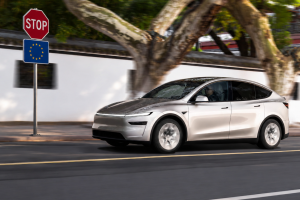
Freenow by Lyft and Baidu's Apollo Go have begun testing the autonomous vehicle "RT6" in London. The test fleet will initially operate with safety drivers in the London borough of Brent. For 2027, the partners plan, according to their own statements, to start offering the service to regular passengers.
The London borough offers different conditions for testing, with urban and suburban traffic environments, the companies said on July 28, 2026. The test builds on the plans announced in 2025 by Lyft and Baidu to gradually introduce autonomous vehicle fleets in Europe.
Coordination with London authorities
Freenow and Lyft are coordinating the project, according to their own statements, with Transport for London and the Centre for Connected and Autonomous Vehicles. The regulatory requirements and the safety of operation are particularly central.
Since 2026, there has been a regulatory framework in Great Britain for pilot offerings with automated passenger transport services. Companies can apply for commercial pilot projects with autonomous taxi, rental car and bus-like offerings. For these services in London, approval by the relevant local transport authority is also required.
Apollo Go uses sixth-generation test vehicles. The "RT6" was developed for ride-hailing and is equipped with technology for autonomous operation. During the current testing, however, safety drivers are inside the vehicles.
Autonomous vehicles to complement the existing fleet
The robotaxis are to be integrated into Freenow's dispatch offering in the future. A hybrid network is planned in which existing taxis and rental cars will be dispatched together with autonomous vehicles.
Freenow expects higher vehicle availability on the platform and thereby shorter waiting times for passengers as a result of the additional vehicles. Whether and to what extent this effect actually materializes is not disclosed in the release.
The majority would try autonomous taxi rides
In parallel with the test operation, the companies published results of a Censuswide market research survey on the acceptance of autonomous vehicles in London. According to the survey, 48 percent of respondents have not yet taken a ride in an autonomous car. 58 percent would probably try such a ride.
Interest is particularly high among younger respondents. Almost two-thirds of people under 35 supported the availability of autonomous taxis in London, according to the release. A further 25 percent were thus pleased about an additional mobility option.
As a reason for their interest, 51 percent of respondents cited the new technology. 43 percent cited the expected reliability. 41 percent see in an autonomous ride the opportunity to use travel time as an uninterrupted break.
Passenger service planned for 2027
Freenow and Apollo Go want to open the offer to regular passengers in 2027. Until then, the operation in Brent will serve to test the vehicles under London traffic conditions and to prepare for the planned deployment within the existing dispatch network. (Source: Freenow by Lyft)
Content automatically translated.





Taxi-Fahrzeuge (Pkw) , Taxi-Newsletter, Taxameter, Taxi-Fahrer , BZP – Deutscher Taxi- und Mietwagenverband , Straßenverkehrsordnung (StVO) , Krankenbeförderung , Weiterbildung , Taxi-Konzessionen , Verkehrspolitik , Mietwagenbranche , Taxi-Apps , Berufskraftfahrer-Qualifikations-Gesetz BKrFQG) , Taxizentralen , Personal, Gehälter, Arbeitsschutz , Wirtschaftsnachrichten , Werbung , Taxi-Folierung , Taxi-Umrüster , Straßenverkehr , Elektromobilität, Taxifuhrpark und -flottenmanagement , Taxi-Versicherungen , Hybrid, Diesel, Erdgas , Taxi-Magazin