2 Ausgaben kostenlos für Sie

Fachmagazin taxi heute: Ihr Zugang zu exklusiven Inhalten rund um die Taxi- und Mietwagenbranche.
Aktueller Termin

Meist gelesen
Freenow launches a camera project for digital taxi navigation in Hamburg.
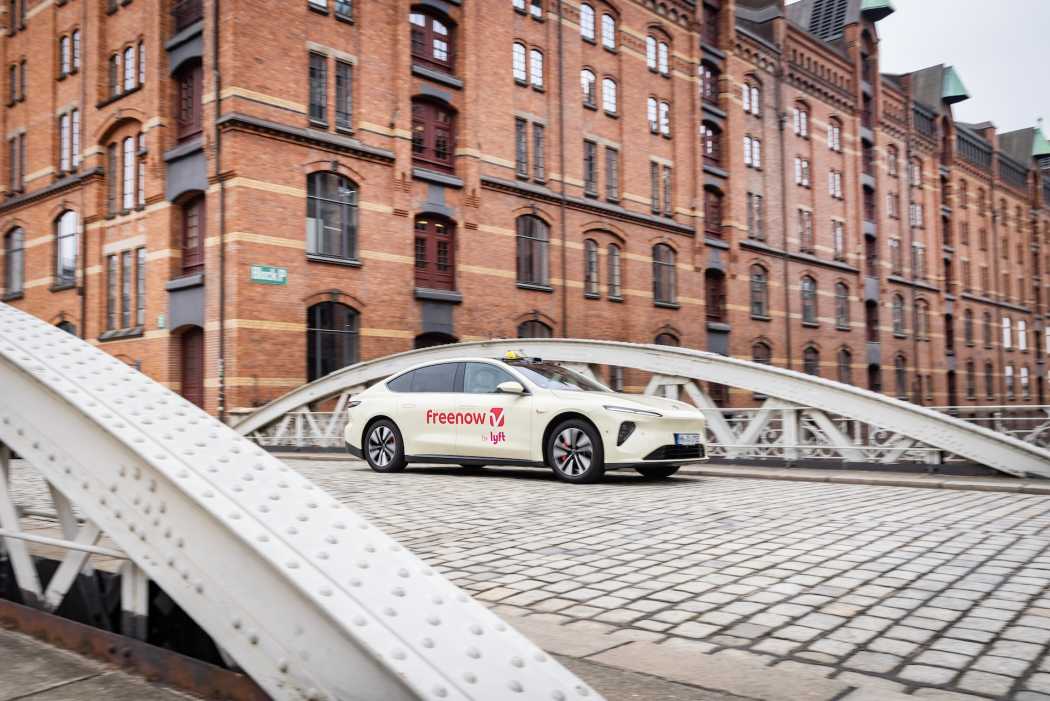
The ride-hailing operator Freenow by Lyft launched a project in Hamburg on October 20, 2026 to improve digital navigation maps for taxi traffic. To this end, the company outfits selected partner companies with special cameras that collect information about the road infrastructure during the ride. The so-called “Map Contributors Program” is intended to increase the accuracy of the map data and, in particular, to take changes into account that are relevant to taxi operations. Previously, the provider had tested the procedure in London and Barcelona.
Cameras capture changes in road traffic
According to Freenow, the project is motivated by limitations of conventional digital map services. These would not always depict certain changes in the road infrastructure in a timely manner. These include, in particular, taxi-specific lanes, temporary construction sites, and relocated taxi stands at train stations and hotels.
To capture such information more accurately in the future, the ride-hailing service installs compact cameras on the windshields of selected taxi vehicles. During the journey, the devices record the road infrastructure. Among other things, traffic signs, lane guidance, and stopping bays are recorded. The information obtained is intended to continuously update the digital map data and to align it more closely with the requirements of taxi traffic. Freenow thus aims to improve the navigation basis for taxi drivers and passengers.
Automatic data collection at no additional hardware costs
For the technical implementation, Freenow uses simple Android devices, according to its own statements. These devices activate themselves automatically during operation, so that data collection can take place without manual activation by the drivers. The company provides the devices to participating drivers free of charge. The collection of street information is possible during regular taxi shifts.
Data protection through automatic anonymization
When processing the camera footage, Freenow, according to its own statements, relies on automated anonymization of personal data. The cameras are directed exclusively at the street space. If faces of people or vehicle license plates are nonetheless captured, they would be automatically pixelated and anonymized. The data processing is carried out in accordance with the GDPR, according to the company.
Project launch after tests in London and Barcelona
With the start in Hamburg, Freenow is continuing its map project following prior test runs in London and Barcelona. The Hanseatic City is thus another deployment site for the program for camera-based capture of street information.
How many Hamburg taxis participate in the project, how long the data collection is planned, and when the information obtained is supposed to flow into the digital navigation, is not disclosed in the statement. The company also provides no information about a possible expansion to further German cities. (Source: Freenow by Lyft)
Content automatically translated.


Taxi-Fahrzeuge (Pkw) , Taxi-Newsletter, Taxameter, Taxi-Fahrer , BZP – Deutscher Taxi- und Mietwagenverband , Straßenverkehrsordnung (StVO) , Krankenbeförderung , Weiterbildung , Taxi-Konzessionen , Verkehrspolitik , Mietwagenbranche , Taxi-Apps , Berufskraftfahrer-Qualifikations-Gesetz BKrFQG) , Taxizentralen , Personal, Gehälter, Arbeitsschutz , Wirtschaftsnachrichten , Werbung , Taxi-Folierung , Taxi-Umrüster , Straßenverkehr , Elektromobilität, Taxifuhrpark und -flottenmanagement , Taxi-Versicherungen , Hybrid, Diesel, Erdgas , Taxi-Magazin