


VISION mobility kostenlos Probelesen

Die Zeitschrift VISION mobility richtet sich an mobilitätsbegeisterte Menschen bzw. Flottenmanager und begleitet den Technologiewandel in Sachen Automotive und Mobilität.
Aktueller Termin

Meist gelesen
BER: Conflict between the taxi and car rental industries is escalating.

At Berlin Brandenburg Airport, the conflict between the taxi and car rental industries is intensifying further. As rbb|24 reports, many taxi drivers are under economic pressure due to illegal passenger poaching and growing car rental fleets.
Limited loading rights at BER
Officially, only taxis from the Dahme-Spreewald district as well as 550 of Berlin's 6,600 taxis may pick up passengers at BER. All other Berlin vehicles as well as taxis from the remaining Brandenburg districts may only bring travelers to the airport and must return without taking on a new fare. In total, this means approximately 1,000 vehicles are therefore eligible to load.
The access to the designated loading zone is technically regulated. Without the appropriate chip in the vehicle, the barrier remains closed. Unauthorized drivers, according to industry representatives, divert to other areas of the airport.
Aggressive Poaching at the Terminal
Several taxi drivers describe, according to rbb|24, that so-called "Klauer" approach arriving passengers directly after the baggage claim and lead them to vehicles parked outside the official stands. At times the behavior was aggressive; there are reports of threats. Some of the drivers involved did hold a taxi concession, but did not have a loading authorization for BER.
According to the Berlin-Brandenburg Taxi Association, insurance coverage and the payment of taxes could also be problematic in the absence of proper business registration.
Return-to-Base Requirement in Focus
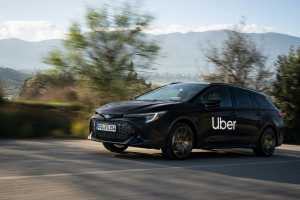
Legally permissible is the pickup of passengers by ride-hailing companies that are mediated through apps like Uber or Bolt. They count as commercial passenger transport and may head to the airport. However, the taxi industry criticizes that trips are sometimes economically viable only through savings on taxes and social security contributions.
A central point of dispute is the return-to-base requirement. Hire cars must return to their operating base after each trip before taking on a new assignment. According to rbb|24, industry representatives doubt that this requirement is being observed consistently.
Concession Revocations and Market Withdrawals
According to information from rbb|24, at the beginning of 2024 at least every fifth ride-hailing vehicle bookable in Berlin operated without a valid concession. At that time there were around 4,500 valid vehicle concessions in the ride-hailing market. Subsequently, Uber, Bolt and Freenow removed nearly 1,700 vehicles from their offering after the State Office for Citizens' and Regulatory Affairs found missing or faulty approvals.
Freenow, in its own statements, has since January 2025 in Berlin-Brandenburg exclusively mediating taxi rides. As rbb|24 reports on inquiry, the company justified the withdrawal from the regional ride-hailing market with economic conditions that did not appear viable for legal operation.
Outmigration to Brandenburg
In January 2026, there were still 1,600 licensed hire cars registered in Berlin, operated by around 300 companies. Within two years, the number of vehicles had decreased by several thousand, according to rbb|24 citing the Berlin State Office for Citizens' and Regulatory Affairs.
Parallel to this, the number of hire-car registrations in Brandenburg rose noticeably. Especially in the Teltow-Fläming district, the stock increased from 573 vehicles in 2024 to 1,357 in November 2025. The Berlin State Office spoke of an out-migration of hire-car companies to escape stricter controls in Berlin.
Also on the taxi side, notable developments are evident. Despite the economically tense situation, the number of taxi licenses in Berlin rose within one year from 5,436 to 6,609. Further applications are pending. The State of Berlin initially suspended the awarding of additional licenses for one year.
The industry, against this background, is demanding more consistent control of existing regulations and closer coordination between Berlin and Brandenburg. (Source: rbb|24; rbb24.de/wirtschaft/beitrag/2026/03/taxis-flughafen-berlin-brandenburg-konkurrenz-uber-bolt.html)
Content automatically translated.


Taxi-Fahrzeuge (Pkw) , Taxi-Newsletter, Taxameter, Taxi-Fahrer , BZP – Deutscher Taxi- und Mietwagenverband , Straßenverkehrsordnung (StVO) , Krankenbeförderung , Weiterbildung , Taxi-Konzessionen , Verkehrspolitik , Mietwagenbranche , Taxi-Apps , Berufskraftfahrer-Qualifikations-Gesetz BKrFQG) , Taxizentralen , Personal, Gehälter, Arbeitsschutz , Wirtschaftsnachrichten , Werbung , Taxi-Folierung , Taxi-Umrüster , Straßenverkehr , Elektromobilität, Taxifuhrpark und -flottenmanagement , Taxi-Versicherungen , Hybrid, Diesel, Erdgas , Taxi-Magazin







