


VISION mobility kostenlos Probelesen

Die Zeitschrift VISION mobility richtet sich an mobilitätsbegeisterte Menschen bzw. Flottenmanager und begleitet den Technologiewandel in Sachen Automotive und Mobilität.
Aktueller Termin

Meist gelesen
Robotaxis in Munich: This is how Waymo and Uber are to hit the streets.
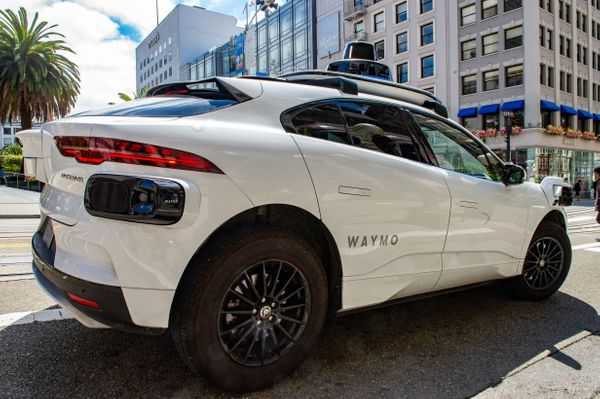
The US companies Waymo and Uber are pushing ahead with their plans for robotaxis in Munich. Waymo aims to deploy driverless taxis in the Bavarian state capital by the end of 2027 and has already begun initial test drives with drivers on board. Uber is collaborating on a similar project with the Israeli startup Autobrains. According to BR24, Autobrains is currently testing on routes between Olympiapark and Munich Central Station. In 2027, passengers are to be carried for the first time in this project.
Munich is not to serve solely as a testing ground. According to the available information, the providers are preparing for a later commercial deployment. Waymo points to Munich's prerequisites for mobility and technology when choosing the location. In the test phase, the technology is to be adapted to local traffic conditions. Uber justifies the choice of location with the engineering tradition, the automotive industry, and the city's transport network, which includes different types of streets.
Regulatory framework for autonomous vehicles
The legal basis for autonomous driving in Germany was created with a reform of the Road Traffic Act in 2021. A prerequisite for the deployment of autonomous vehicles is, among other things, a defined operating area. In addition, there must be a technical supervision that can stop the vehicle at any time. This supervision does not have to be on board, but can intervene remotely.
For a regular driverless robotaxi operation in Munich, providers must go through a three-step process. In the first step, an operating permit is required from the Federal Motor Transport Authority (KBA). Next, the Bavarian State Building Authority must approve the intended operating area. The operating area could, for example, be the Munich city area. In the third step, a license to participate in public road traffic is required from the competent registration authority.
Waymo and Uber are still in test operation. According to the Bavarian State Building Authority, there are therefore not yet any corresponding permit applications there. The authorities involved in the process, however, are already in contact.
Owner liable in accidents
Liability for potential accidents is also regulated by law. In principle, the owner is liable for an autonomous vehicle. The basis for this is hazard liability, where liability is linked to the danger arising from operating a vehicle.
For autonomous vehicles, higher liability caps apply than for conventional cars. For these, the maximum liability is five million euros for personal injury and one million euros for property damage. For robotaxis, the source text mentions liability caps of up to ten million euros for personal injury and two million euros for property damage.
During ongoing testing, the safety driver can also be held liable for damages if he has neglected his monitoring duty. If a technical fault is responsible for an accident, the manufacturer can also be held responsible according to the information provided.
IAA Mobility as a potential deployment date
Munich is also the site of IAA Mobility. For the event in 2027, robotaxis are to be deployed for the first time. The plans meet political support for testing autonomous driving. The Bavarian Ministry of Economic Affairs supports companies that advance this technology in the Free State. Economic Minister Hubert Aiwanger evaluates Waymo's test activities positively.
At the same time, the entry of US providers is facing criticism. Markus Lienkamp, Professor of Autonomous Driving at the Technical University of Munich, sees deficiencies in the development of corresponding technologies in Germany and, against this background, criticizes the market opening for US companies.
Also Florian von Brunn, the SPD parliamentary group’s spokesperson for economic and digital policy, criticizes the development. He points out, among other things, that the technology and potential profits from the business lie with US companies. In addition, he sees open questions about how to handle the data generated. Autonomous driving has been funded in Bavaria for years with public funds and, in his view, must therefore also be implemented by domestic actors.
Aiwanger, by contrast, points out that the state government also wants to persuade German manufacturers to seize the market opportunities of autonomous driving. He frames the activities of international providers within Bavaria's fundamental openness to innovation and technological progress. (Source: BR24)
Content automatically translated.



Taxi-Fahrzeuge (Pkw) , Taxi-Newsletter, Taxameter, Taxi-Fahrer , BZP – Deutscher Taxi- und Mietwagenverband , Straßenverkehrsordnung (StVO) , Krankenbeförderung , Weiterbildung , Taxi-Konzessionen , Verkehrspolitik , Mietwagenbranche , Taxi-Apps , Berufskraftfahrer-Qualifikations-Gesetz BKrFQG) , Taxizentralen , Personal, Gehälter, Arbeitsschutz , Wirtschaftsnachrichten , Werbung , Taxi-Folierung , Taxi-Umrüster , Straßenverkehr , Elektromobilität, Taxifuhrpark und -flottenmanagement , Taxi-Versicherungen , Hybrid, Diesel, Erdgas , Taxi-Magazin







