


2 Ausgaben kostenlos für Sie

Fachmagazin taxi heute: Ihr Zugang zu exklusiven Inhalten rund um die Taxi- und Mietwagenbranche.
Aktueller Termin

Meist gelesen
Battery shortage for EVs? How Mercedes, BMW, VW, Renault and Nissan handle replacement batteries

What is everyday routine for classic-car drivers regularly triggers panic among owners of newer cars. We are talking about spare parts—or, more precisely, getting hold of them. When it comes to the batteries of electric cars, things get really interesting. Replacement batteries for electric vehicles shouldn’t be a problem—or so you might think. Far from it. The Smart Fortwo Electric Drive in particular recently caused a stir in the press.
“If the battery fails, the scrapyard looms,” reported the trade magazine “auto motor und sport.”
The portal “karlsruhe-insider.de” went a step further:
“Mercedes disaster: Electric cars can no longer be repaired.”
Mercedes is quick to reassure that battery failure is not a death sentence for every example of the electric city runabout.
“It affects exclusively the Smart ED3 of the 451 series. We are pleased to confirm that there is currently still availability for repairs,” a spokeswoman said.


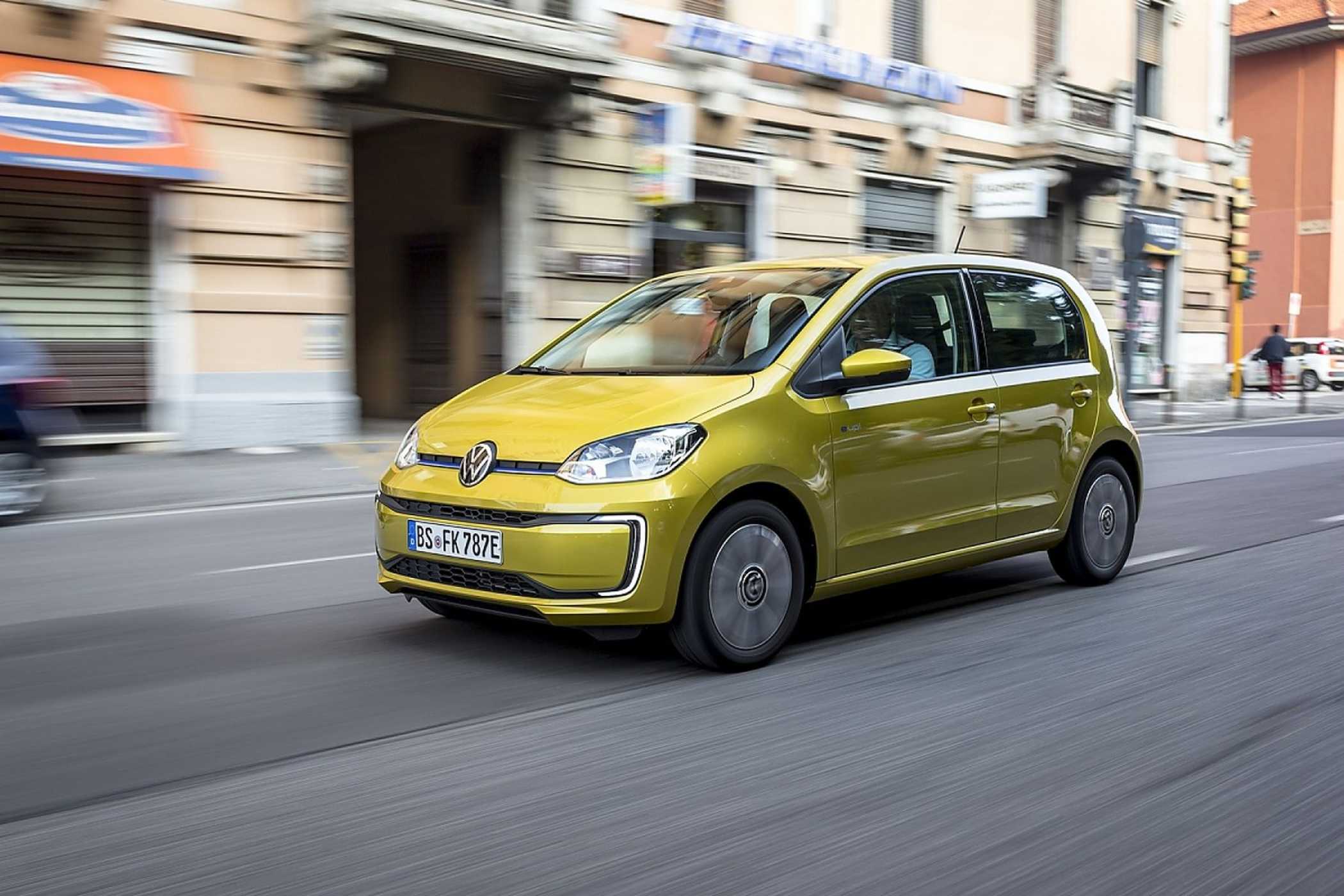

What if there are no more replacement batteries?
On closer inspection, two expressions stand out: "currently still" and "repairs." There is no mention of new batteries. Apparently, the Swabian carmaker underestimated demand for replacement batteries for the electric car built between 2012 and 2015.
"In Germany, the main market, a repair solution for defective batteries was developed in cooperation with an external service provider," the spokeswoman added.
It is common knowledge in Stuttgart-Untertürkheim that this service provider is Bosch workshops. EV Clinic Berlin has also made a business out of battery repair. In the course of repairing the energy storage units, there was a case in which 80 of 93 cells were damaged. You can imagine the consequence: a total loss. The name of the "Save the Smart" project is telling: "Valhalla"—the hall of Norse mythology where the fallen warriors gather.
The BMW i3 is also "getting on in years"
So are older electric cars facing a Twilight of the Gods? Is the BMW i3 also about to roll into the automotive end times? In Munich, they are relaxed and point to spare parts availability for at least ten years after production ends. So owners of the first generation of the city cube with the 60 Ah batteries can sit back and relax until 2027. Moreover, it is technically possible to retrofit higher-capacity cells, since the battery housing is identical and the batteries consist of eight modules with twelve cells each.


BMW guarantees 100 percent capacity for the replacement part
So far, so good. That still leaves the question of how to ensure that the energy storage units still have full capacity even after ten years. After all, a battery is not a sheet-metal part that you can simply leave on a shelf and take out when needed. The Munich-based company puts the batteries into a comfort zone by lightly charging and discharging them cyclically during longer storage periods and keeping them near a mid state of charge.
"If a replacement storage module from us is installed today in the first-generation BMW i3, it has 100 percent state of health. It is practically a new part," BMW clarifies.
Volkswagen offers repair options
What about other electric veterans? For example, the VW e-Up? In Wolfsburg, they take a similar approach to Munich.
"For our current electric vehicles, repair options appropriate to the vehicle's current value are available. These enable, both during the warranty period — according to the warranty conditions, Volkswagen guarantees a net energy content of at least 70 percent for up to 160,000 kilometers of mileage or eight years of use — and beyond that, technically and economically sensible repairs as well as the replacement of individual components," a spokeswoman said.
The small VW was built from 2013 to the end of 2023.
With the newer EVs, there is therefore still no reason to worry about being left without a battery. With the first-generation e-Up models, things already look different. These also appear to be covered—as indicated by the clause "as well as beyond that." The qualifier "economically sensible" is more relevant, since replacing the entire battery can run into five figures. For individual modules, the costs are significantly lower. But VW seems prepared for that as well.
"If individual cell modules are replaced or repaired, a cell-balancing process during installation ensures that the differences in charge between the existing and the new cell module are within the specified tolerance," the spokeswoman explains.
The question remains whether replacement batteries are available. To ensure this is the case, the Wolfsburg-based carmaker stores the batteries under similar conditions to its Bavarian competitor. Buzzword: comfort zone. The optimal state of charge (SoC) for storage is between 30 and 60 percent and the storage temperature is kept constant between 15 and 25 degrees Celsius. VW also conducts regular spot checks and tops up with a special high-voltage charger if compensation for the slight, physically unavoidable self-discharge is required.
First-generation Leaf – eight-year battery warranty is expiring
Nissan is taking a similarly customer-oriented approach but is quick to point out that only a few first-generation Leafs are still on German roads. The Japanese manufacturer also wants to support these customers, albeit with a caveat: it only applies to vehicles covered by the extended eight-year warranty.
"Naturally, we support our customers with first-generation Nissan Leaf models that fall under our extended eight-year warranty for battery condition assessment. If there are concerns regarding the battery, the vehicle is inspected by our authorized Nissan dealer network. Afterwards, together with our customers, the most suitable solution in terms of customer satisfaction is sought and implemented," said the Japanese carmaker.
Since the first-generation Nissan Leaf was sold between 2012 and the end of 2017, this warranty for the most recent examples expires at the end of this year. Nissan has not yet announced what will happen after that.
Renault with circular economy and repair-friendly battery
Renault approached the subject of automotive batteries very early and very thoughtfully. The French follow a three-stage circular-economy concept including recycling and second-life use as stationary energy storage. Since Renault introduced a battery rental model for the Zoe, which has been sold in Germany since 2012, these batteries have been regularly put through their paces. The batteries are designed so that individual modules can be exchanged or replaced. This reduces repair costs and helps Zoe battery owners after the eight-year purchase warranty or after 160,000 kilometers, while rental-model customers are off the hook. After all, Renault offers remanufactured batteries at around 30 percent less than new ones.
These examples were compiled for us by: Wolfgang Gomoll; press-inform
Content automatically translated.




Taxi-Fahrzeuge (Pkw) , Taxi-Newsletter, Taxameter, Taxi-Fahrer , BZP – Deutscher Taxi- und Mietwagenverband , Straßenverkehrsordnung (StVO) , Krankenbeförderung , Weiterbildung , Taxi-Konzessionen , Verkehrspolitik , Mietwagenbranche , Taxi-Apps , Berufskraftfahrer-Qualifikations-Gesetz BKrFQG) , Taxizentralen , Personal, Gehälter, Arbeitsschutz , Wirtschaftsnachrichten , Werbung , Taxi-Folierung , Taxi-Umrüster , Straßenverkehr , Elektromobilität, Taxifuhrpark und -flottenmanagement , Taxi-Versicherungen , Hybrid, Diesel, Erdgas , Taxi-Magazin







