2 Ausgaben kostenlos für Sie

Fachmagazin taxi heute: Ihr Zugang zu exklusiven Inhalten rund um die Taxi- und Mietwagenbranche.
Aktueller Termin
Meist gelesen
Robotaxis in Europe: How safe are autonomous taxis really?
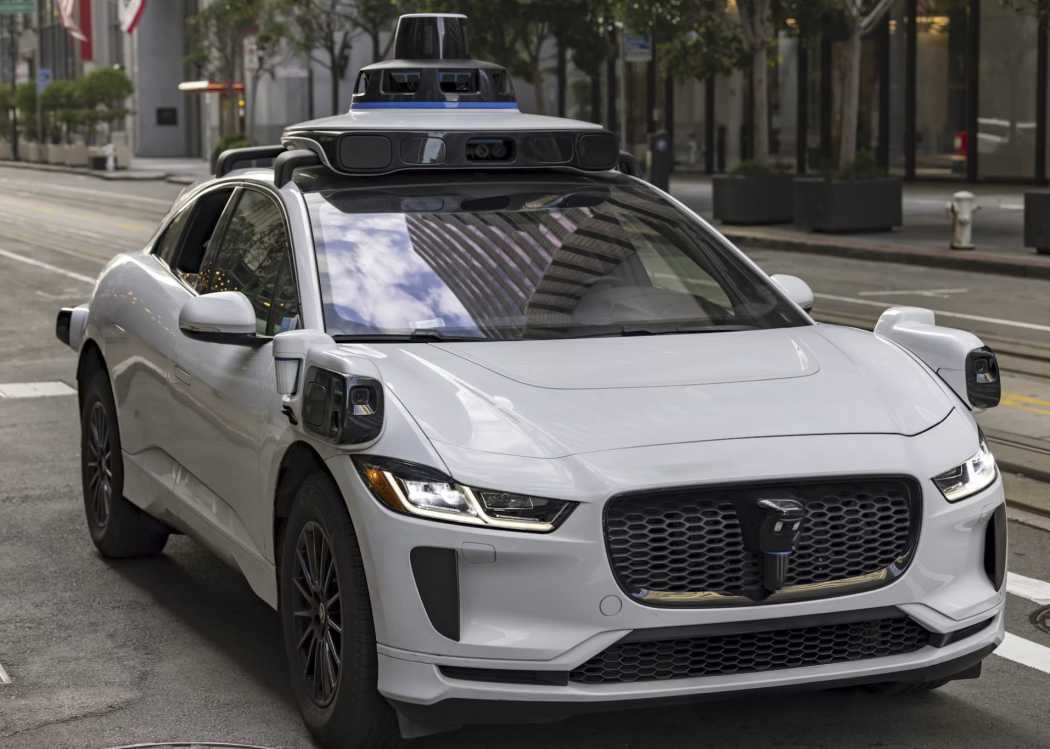
The concept still seems futuristic: A vehicle stops at the roadside, the door opens, the passenger gets in – but no one sits in the driver's seat. What for a long time was considered material for science fiction is now becoming a reality in European cities. Since the beginning of September 2026, London's streets have also become part of the testing grounds for autonomous robotaxis.
Interest in the technology is growing noticeably. According to electronics distributor Mouser, Google search queries on the topic of "autonomous driving" in Germany rose within one month by 345 percent. The development suggests that the public debate is increasingly moving away from the question of whether autonomous driving will come, and is focusing more on when it will become a fixed part of everyday life. The industry is already looking toward other European cities. Munich is regarded as a candidate for entry at the end of 2027. Paris is also repeatedly named as a possible market, though the timetable there depends on regulatory decisions and technological development.



London as a new showcase for autonomous mobility
With the start in London, robotaxi technology has reached another symbolically significant milestone. The British capital ranks among the most complex traffic environments in Europe: dense urban traffic, numerous construction sites, bus lanes, cyclists, pedestrian flows, and a road network that even local drivers regularly face challenges. It is precisely for this reason that the London test operation is being closely watched. Because autonomous vehicles must prove themselves there not only in cordoned-off test sites or in straightforward suburbs, but also under real-world conditions.
However, the technology still does not drive completely on its own. In many test vehicles there is still a safety driver on board. He is supposed to be able to intervene if the system reaches its limits or misjudges a situation. This very circumstance, however, causes skepticism among many people. If a human being is still necessary as a safeguard, critics ask, how reliable can the system actually be?
Between curiosity and mistrust
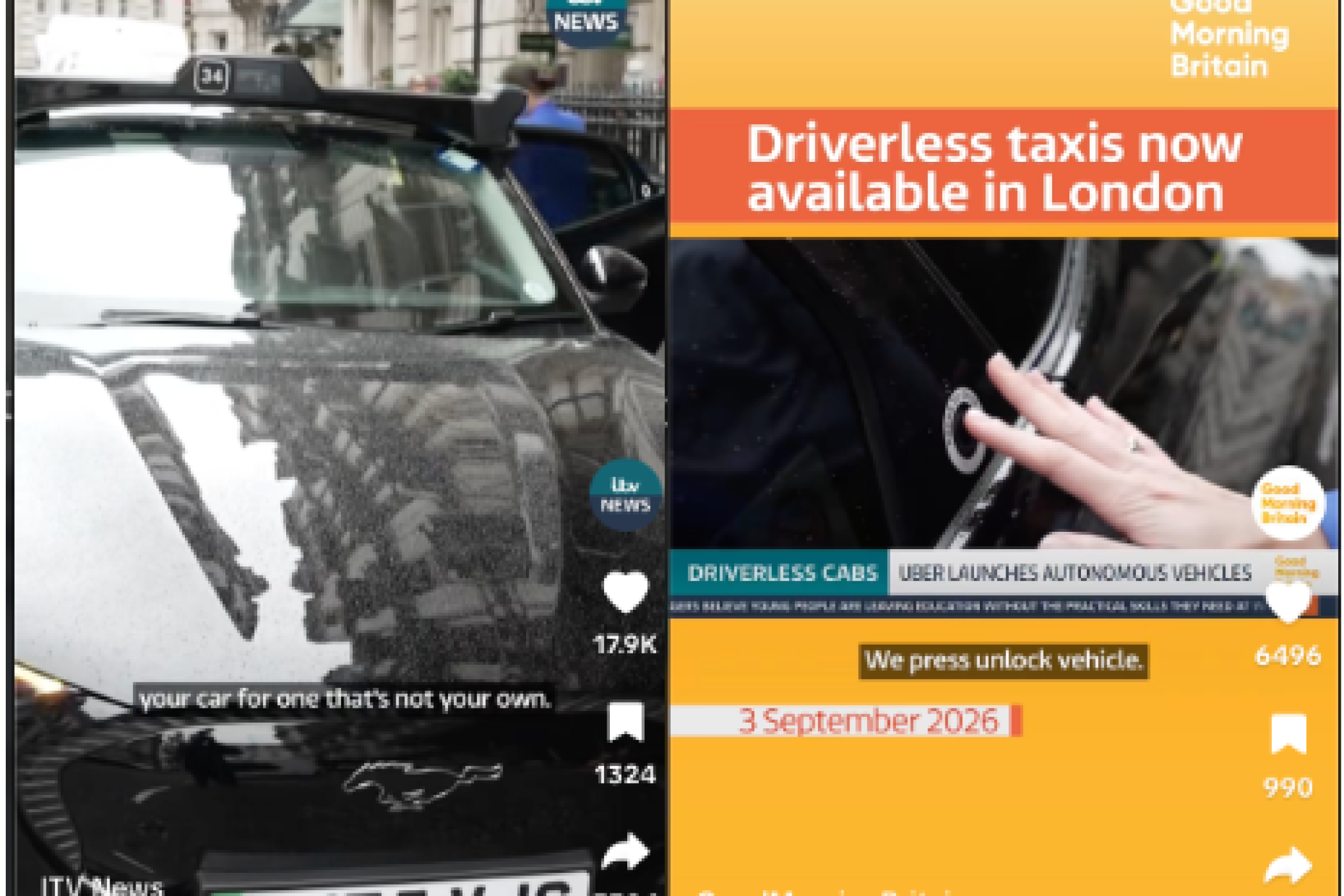
The public discussion is no longer led solely by engineers, authorities and transport companies. Social networks have developed into an important resonance space for the acceptance of autonomous mobility. A TikTok video about the new robotaxi concept recently became a public hit. More than 17,900 likes and over 1,300 comments show how strongly the topic polarizes.
Reactions ranged from curiosity to open rejection. Comments like “Not a safe car” or “I would rather walk, thanks” illustrate that many people still greet the technology with considerable suspicion. For providers of autonomous mobility services, this very question could become the biggest challenge. Technical performance alone is not enough. The systems must also gain societal acceptance.
How a robotaxi perceives its surroundings
From the developers' perspective, the key to safety lies in the combination of different technologies.
“Modern robotaxis use multiple technology layers to capture the situation around the vehicle, including cameras, radar, LiDAR and high-precision mapping. These systems work together to detect pedestrians, cyclists, other vehicles, road markings and potential hazards, while the onboard computers enable the vehicle to make decisions in fractions of a second,” explains Mark Patrick, Director of Technical Content at Mouser.
While cameras detect traffic signs and road markings, radar systems measure distances and speeds. LiDAR sensors, which use laser pulses to generate a three-dimensional image of the surroundings, are added. This is complemented by high-resolution digital maps as well as powerful onboard computers in the vehicle. The goal is to create as complete a representation of the surroundings as possible. While a human driver processes information mainly through his eyes, an autonomous vehicle combines multiple data sources simultaneously.
Learning from millions of situations
Another difference from human drivers, according to the developers, lies in the learning process of the systems.
"Another important factor is the extensive testing to which autonomous driving technology is subjected in a wide range of scenarios. Each occurring unusual situation can provide valuable data that helps engineers refine the system — whether it's unpredictable pedestrian behavior, changing weather conditions, or complex intersections. Over time, this creates a continuous feedback loop in which the technology becomes increasingly better at recognizing and reacting to situations that could pose a challenge for a human driver," Patrick continues.
The basic idea behind it is simple: every mile driven yields new data. Each unexpected situation can be analyzed and used for future software versions.
While human drivers collect their experiences individually, autonomous systems are to benefit from the experiences of entire vehicle fleets. A problem that occurs in London could theoretically help improve the systems in Munich or Paris.
No infallibility, but a technical learning process
Despite all progress, Patrick warns against viewing autonomous vehicles as flawless technology.
"That does not mean that robotaxis are infallible or that safety concerns should simply be brushed aside. Rather, the crucial point is that autonomous driving is a technical system that can be measured, tested and improved. As sensors become more powerful, AI models more sophisticated, and vehicle safety systems more resilient, the technology has the potential to reduce many of the risks associated with human driving."
In fact, the debate has long since shifted away from the question of whether autonomous vehicles can make mistakes at all. What matters is whether they cause fewer mistakes in the long run than humans. After all, a substantial portion of all traffic accidents is due to distraction, fatigue, misjudgments, or human error. This is exactly where developers of autonomous systems are focusing.
Why Technology Could Keep Getting Better
According to Patrick, another factor in the long-term development of autonomous mobility is that software can be updated.
"The safety of robotaxis can continue to improve, as the underlying technologies continue to evolve. Advanced sensors, more powerful AI systems, and modern safety features work together to make autonomous vehicles more reliable."
There is also an advantage over human drivers.
"Unlike human drivers, autonomous systems do not get tired or distracted. At the same time, their ability to interpret the environment and respond to different situations can be continually developed through software updates and real-world driving data."
For passengers, this could in the long term lead to a more predictable ride experience.
"For passengers, this means that the experience can become more predictable and reliable as the technology matures. The goal is not a vehicle that eliminates every difficult situation entirely, but a system that detects potential risks early, responds appropriately, and continuously improves through new insights."
What robot taxis mean for the taxi industry
For the taxi and rental-car industry, the safety debate is far more than a technical issue. It ultimately decides whether autonomous mobility services will be socially accepted and able to enter the market on a larger scale. Many robotaxi projects are still under scrutiny by authorities and regulators. Yet the development shows that autonomous vehicles are increasingly finding their way from laboratories to the streets.
The real yardstick will not be the performance of individual sensors or algorithms. What will matter is whether the systems can deliver in everyday life what passengers have expected from a taxi for decades: to reach their destination safely, reliably, and without unpleasant surprises. With the start in London, this marks not only another field test. It also marks the beginning of a proving ground for a technology that will fundamentally transform public transport and the taxi industry in the coming years.
Content automatically translated.


Taxi-Fahrzeuge (Pkw) , Taxi-Newsletter, Taxameter, Taxi-Fahrer , BZP – Deutscher Taxi- und Mietwagenverband , Straßenverkehrsordnung (StVO) , Krankenbeförderung , Weiterbildung , Taxi-Konzessionen , Verkehrspolitik , Mietwagenbranche , Taxi-Apps , Berufskraftfahrer-Qualifikations-Gesetz BKrFQG) , Taxizentralen , Personal, Gehälter, Arbeitsschutz , Wirtschaftsnachrichten , Werbung , Taxi-Folierung , Taxi-Umrüster , Straßenverkehr , Elektromobilität, Taxifuhrpark und -flottenmanagement , Taxi-Versicherungen , Hybrid, Diesel, Erdgas , Taxi-Magazin