


2 Ausgaben kostenlos für Sie

Fachmagazin taxi heute: Ihr Zugang zu exklusiven Inhalten rund um die Taxi- und Mietwagenbranche.
Aktueller Termin

Meist gelesen
Fuel price cap from 2027: TMV calls for further reforms.
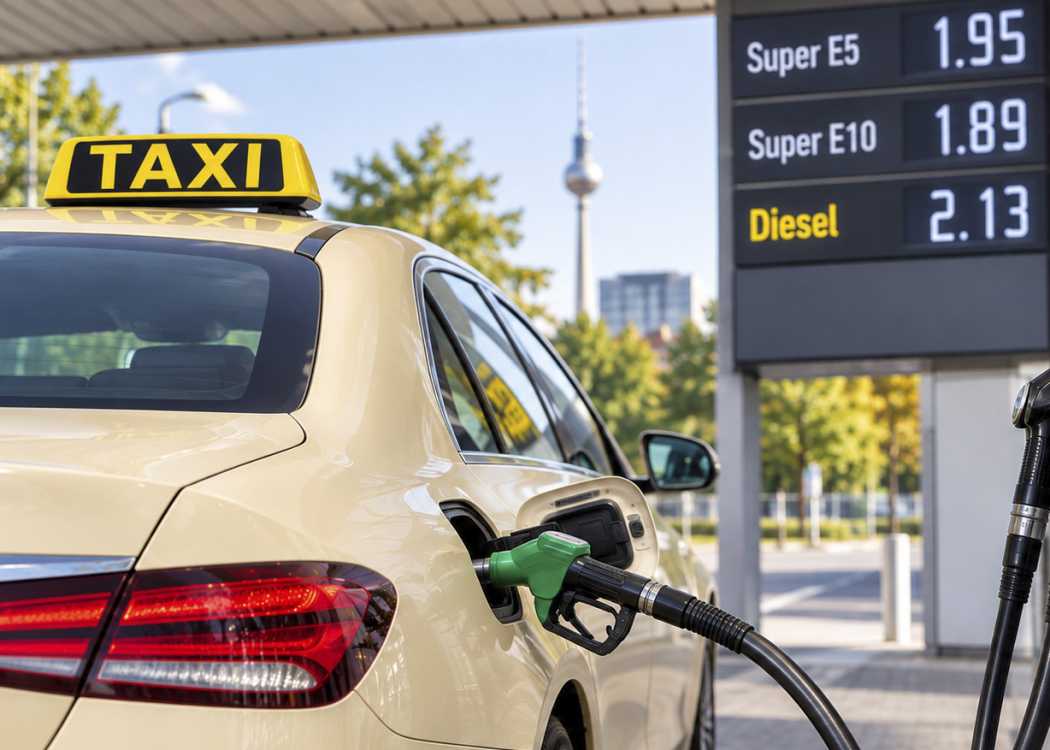
The Taxi and Rental Car Association Germany (TMV) welcomes the planned temporary fuel price cap for early 2027, but demands broader economic-policy reforms from the federal government. As the association announced on 19 November 2026, a temporary cap on fuel prices could stabilize the operating costs of taxi and rental car companies. At the same time, the TMV calls for a consistent reduction of bureaucracy, lower social security contributions, and a more reliable implementation of political commitments.
Fuel price cap to limit cost increases
According to the association, the coalition committee has agreed to introduce a temporary maximum price for fuels at the beginning of 2027. How the measure will be concretely designed has not yet been decided.
The TMV sees this as a way to cushion short-term cost increases and to improve the economic predictability for the businesses. Particularly for the taxi industry, a cap on fuel costs is relevant because fare tariffs are set by authorities. Rising expenditures for gasoline and diesel could therefore not be offset quickly through higher fares.
The association calls for designing the planned price cap to be transparent, practically implementable, and time-limited. In addition, the fuel supply must also be ensured in rural regions. The effectiveness of the measure should be reviewed from the outset.
Existing gas station regulation under criticism
The TMV points to the regulation on fuel prices that has been in effect since 1 April 2026. Since then, gas stations are allowed to raise their prices only once daily at 12:00 noon.
According to ADAC evaluations, this measure has not led to falling fuel prices. Rather, prices have risen. Already in the first week after the introduction of the regulation, diesel price per liter rose by more than 13 cents.
Even scientific studies from the Center for European Economic Research come, according to the association's statement, to the result that restricting daily price increases indirectly leads to higher average prices.
At the same time, price fluctuations within a day are particularly pronounced. For diesel, they average 18.4 cents per liter. The ADAC has therefore called for the abolition of the existing regulation.
Red tape reduction as a central demand
Beyond fuel prices, the TMV sees further needs for economic policy action. In doing so, the association points to the positions of the top associations of the German economy, which have declared 2026 the year of reforms.
According to a business climate survey by the German Chamber of Industry and Commerce, 45 percent of the companies surveyed consider bureaucracy their biggest challenge. From the perspective of the economic associations, too many measures to reduce bureaucratic burdens have been announced but not adequately implemented.
Therefore, TMV calls for the elimination of unnecessary reporting, verification, and documentation obligations. New bureaucratic requirements would have to be justified in principle. The association thus advocates greater relief for businesses in administrative tasks.
Reduce Social Security Contributions Below 40 Percent
Another focus of the demands concerns payroll costs. The association supports the goal of the employers' associations to bring social security contributions back below the 40 percent mark.
According to TMV, this threshold has been exceeded since 2022. The contributions have continued to rise since then. The association therefore calls for structural reforms of the social security systems to limit the burden on businesses.
Flat-rate caps that would place an additional burden on individual service providers are rejected by TMV. Instead, the causes of rising social security contributions must be addressed through fundamental changes.
Association calls for a reliable economic policy
In addition to cutting bureaucracy and limiting non-wage labor costs, the TMV calls for a more restrained government expenditure policy. Public budgets should be oriented to available revenues and set clear priorities for expenditures.
Furthermore the association calls for political commitments and already concluded agreements to be implemented more consistently. For taxi and rental-car companies, a long-term, dependable economic policy orientation is more important than short-term, changing individual measures.
The planned fuel price cap could, from the TMV's perspective, therefore provide temporary relief. However, the fundamental economic burdens on the businesses cannot be eliminated by this. What is decisive are structural reforms and a reliable implementation of announced measures. (Source: Taxi and Rental Car Association Germany)
Content automatically translated.


Taxi-Fahrzeuge (Pkw) , Taxi-Newsletter, Taxameter, Taxi-Fahrer , BZP – Deutscher Taxi- und Mietwagenverband , Straßenverkehrsordnung (StVO) , Krankenbeförderung , Weiterbildung , Taxi-Konzessionen , Verkehrspolitik , Mietwagenbranche , Taxi-Apps , Berufskraftfahrer-Qualifikations-Gesetz BKrFQG) , Taxizentralen , Personal, Gehälter, Arbeitsschutz , Wirtschaftsnachrichten , Werbung , Taxi-Folierung , Taxi-Umrüster , Straßenverkehr , Elektromobilität, Taxifuhrpark und -flottenmanagement , Taxi-Versicherungen , Hybrid, Diesel, Erdgas , Taxi-Magazin







