


Ihr kostenloser Branchen-Newsletter

Lassen Sie sich von unseren Fachjournalisten einmal wöchentlich über die wichtigsten aktuellen Entwicklungen der Taxi-Branche informieren, bequem direkt in Ihre Mailbox.
Aktueller Termin

Meist gelesen
EY Analysis: German Carmakers Fall Behind
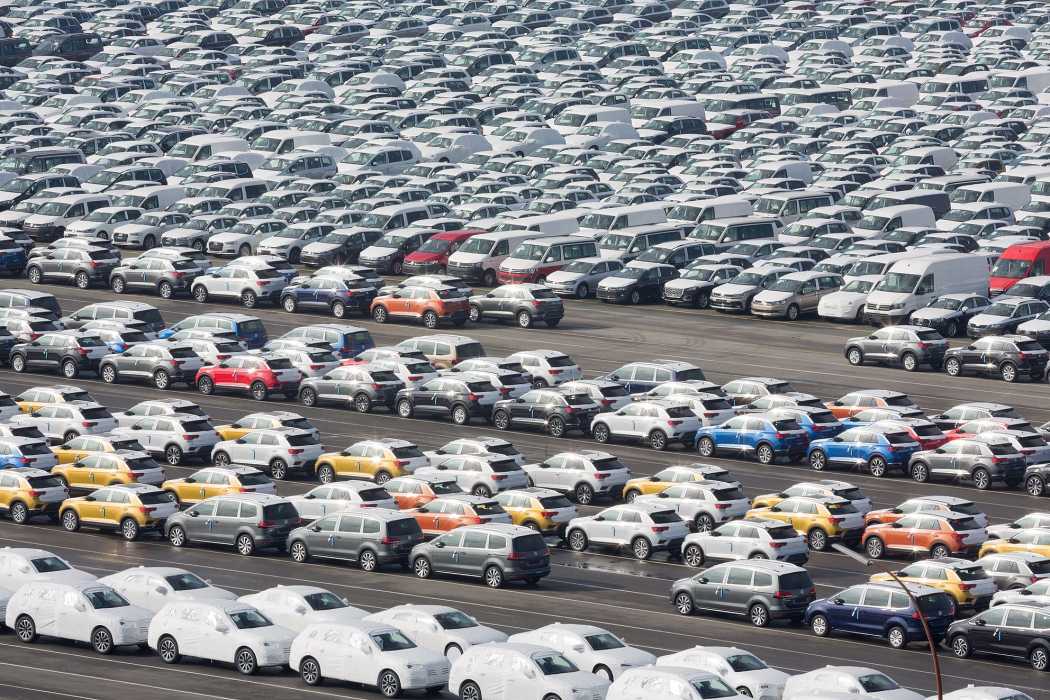
The German car manufacturers performed worse last year than many of their competitors. This is shown by an analysis for which the auditing and consulting firm EY (Ernst & Young) evaluated the figures of the 16 leading manufacturers worldwide. In terms of revenue development, only Stellantis performed worse. The Opel parent company recorded a decrease of 17 percent. VW still achieved a slight increase in revenue in 2024, while BMW and Mercedes-Benz did less business.
Overall, their revenues fell by 2.8 percent. For comparison: The revenue of all the companies examined increased by 1.6 percent in 2024 and surpassed the mark of two trillion euros. Although the German trio still accounted for around 30 percent with revenues of almost 613 billion euros, their share of total revenue decreased compared to the previous year. VW, BMW, and Mercedes also lagged significantly behind the majority of other companies in terms of operating profit. According to the analysis, Japanese manufacturers and U.S. automakers developed better than the German companies.
EY Expert: The Wind Has Shifted
According to EY market observer Constantin Gall, things aren't going smoothly for German manufacturers:
"Sales are developing weakly, the high investments in electromobility are not paying off because demand is nowhere near as strong as hoped."
In addition, he says there are self-inflicted problems such as expensive software failures, restructuring costs, and recalls. As recently as 2023, premium manufacturers were still able to enforce high prices, Gall explained. But the wind has shifted. Economic conditions and global conflicts have significantly reduced demand. Competition is increasingly being fought over price. Furthermore, German manufacturers are especially worried about Asian manufacturers with their innovative yet affordable vehicles.
Crisis in the Automotive Industry
The automotive industry is facing a crisis due to weak economic conditions and is suffering from lower demand, especially for electric vehicles. Several manufacturers and suppliers have already announced cost-cutting programs with job cuts in recent months. The situation is likely to worsen due to the trade dispute with the United States: Last week, US President Donald Trump made good on his threats and announced additional tariffs of 25 percent on all car imports starting in early April.
This comes at a bad time, particularly for manufacturers from Germany, as the USA is their most important export market according to the latest figures from the Federal Statistical Office. No other country took in as many new cars from Germany as the United States.
Gall does not expect a positive turnaround this year—neither in sales nor in revenue and profit:
"In Europe, the economy is sluggish, the newly imposed tariffs in the USA are likely to result in significant sales losses, and in China there is a fierce competitive battle driven heavily by price competition," he said.
Companies now need to do their homework. There is no way around a strategic realignment and focusing on the core brand. A cost-cutting course can only be a means to an end to finance one's own transformation.
Content automatically translated."You can't save your way to health," Gall said.


Taxi-Fahrzeuge (Pkw) , Taxi-Newsletter, Taxameter, Taxi-Fahrer , BZP – Deutscher Taxi- und Mietwagenverband , Straßenverkehrsordnung (StVO) , Krankenbeförderung , Weiterbildung , Taxi-Konzessionen , Verkehrspolitik , Mietwagenbranche , Taxi-Apps , Berufskraftfahrer-Qualifikations-Gesetz BKrFQG) , Taxizentralen , Personal, Gehälter, Arbeitsschutz , Wirtschaftsnachrichten , Werbung , Taxi-Folierung , Taxi-Umrüster , Straßenverkehr , Elektromobilität, Taxifuhrpark und -flottenmanagement , Taxi-Versicherungen , Hybrid, Diesel, Erdgas , Taxi-Magazin







