VISION mobility kostenlos Probelesen

Die Zeitschrift VISION mobility richtet sich an mobilitätsbegeisterte Menschen bzw. Flottenmanager und begleitet den Technologiewandel in Sachen Automotive und Mobilität.
Aktueller Termin

Meist gelesen
Waymo: News overview of autonomous robotaxi operations

Table of Contents: Navigate effortlessly through our comprehensive news collection on the topic Waymo (click to jump to the corresponding news item and at the end of each news item simply click here to return to the index)
This article consists of the following Waymo news items:
- Woman gives birth to a baby in a Waymo robotaxi (11.12.2025)
- Autonomously on the road: Waymo plans first driverless taxis in Europe (16.10.2025)
- Waymo launches pilot project for robotaxi rides at San Francisco International Airport (23.09.2025)
- More expensive, later, yet still in demand: Why passengers still opt for Waymo's robotaxis (13.06.2025)
- Waymo to more than double its robotaxi fleet (04.06.2025)
- Waymo reaches 1 million autonomous rides per month – Tesla plans entry with robotaxi fleet (25.04.2025)
- Volkswagen's ID.Buzz drives for Waymo – and for Uber (25.04.2025)
- Empty Waymo robotaxi blocks fast-food drive-thru (10.04.2025)
- Illegal parking on autopilot – Waymo taxis in the authorities' crosshairs (17.03.2025)
- Waymo expands robotaxi operations in Silicon Valley (13.03.2025)
- Cooperation: Moove and Waymo aim to redefine the future of urban mobility (08.01.2025)
- Waymo robotaxis perform 150,000 rides per week (31.10.2024)
- Waymo robotaxis perform 100,000 rides per week (22.08.2024)
- Waymo robotaxis require fewer cameras and radars (21.08.2024)
- Waymo stops parking-lot horn concerts (14.08.2024)
- Ends up in oncoming traffic: US officer stops Waymo robo-taxi (08.07.2024)
- Waymo robotaxi company now without a waiting list in San Francisco (01.07.2024)
- Waymo robotaxi company with second recall action (13.06.2024)
- US authorities expand investigation of robotaxi company Waymo (27.05.2024)
- Waymo defends robotaxi ride in oncoming traffic (23.04.2024)
- Mob sets Waymo robotaxi on fire (12.02.2024)


Woman Gives Birth to a Child in a Waymo Robotaxi
News from December 11, 2025 by Thomas Kanzler
(dpa) A birth in a car is rare, but it can happen. In San Francisco, the situation for the woman in labor was even more unusual: she was in a robotaxi with no one at the wheel.
A woman in San Francisco gave birth to a child in a driverless Waymo robotaxi, Google's sister company. Mother and baby subsequently arrived safely at a hospital, Waymo said.
The woman was already on the way to the hospital in the car when Waymo's service team noticed an "unusual activity," it said. They then contacted her in the vehicle—and also notified the emergency services. However, the robotaxi arrived at the clinic faster than an ambulance could reach it.
No one at the wheel
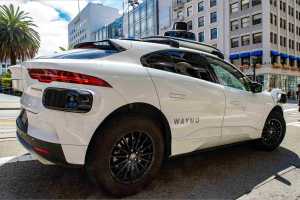
Waymo's Jaguar electric cars converted into robotaxis, with distinctive sensors on the roof, are part of San Francisco's cityscape. They operate autonomously—driven by software—with no person at the wheel and can be summoned via an app. The vehicles have an interior camera, among other things, to deter vandalism and to keep an eye on cleanliness.
Waymo operates around 2,500 robotaxis in several US cities. The focus areas are San Francisco and the adjacent Silicon Valley with about 1,000 vehicles and Los Angeles with around 700. The Google sister company is thus the clear market leader in the new business.
Challenger: Tesla
The Elon Musk-led electric car maker Tesla aims to become number one and relies, among other things, on a cost advantage: The cars should perceive their surroundings only with cameras. Waymo and other developers counter this by using more expensive technology such as laser radars that scan the surroundings. Tesla currently has only a few dozen robotaxis at its headquarters in Austin, Texas, where the vehicles are currently operated with a supervisor in the front passenger seat.
Autonomous travel: Waymo Plans First Driverless Taxis in Europe
News from October 16, 2025 by Kathrin Köstner
The Alphabet company is pushing its expansion into Europe. In cooperation with Moove and Jaguar Land Rover, a ride-hailing service is being created that will supplement London's mobility mix and at the same time improve traffic safety.
The US autonomy specialist Waymo plans to launch its driverless ride-hailing service in London in 2026. The company, a subsidiary of the Alphabet conglomerate, aims to establish a commercial offering without a safety driver for the first time in Europe.
Preparation and Partnerships
In the coming months, the technical and organizational basis for operation will be established. Waymo is working with the fleet operator Moove and says it is in close contact with local and national authorities to obtain the necessary permits for commercial operation. The service should be bookable via the Waymo app and integrated into London's existing transport network.
Experiences from the USA
In the United States, Waymo is already operating autonomous vehicles. According to the company, the 'Waymo Driver' system has logged more than 100 million autonomous miles on public roads and carried over ten million paid rides.
Technological Basis and Development in the United Kingdom
London and Oxford serve as Waymo's international development locations. There the company is working on large-scale simulation methods that are used as a testing environment for the further development of autonomous driving functions. For operation in London, fully electric Jaguar I-PACE vehicles equipped with the Waymo Driver system will be used. The vehicles are developed in cooperation with Jaguar Land Rover, a long-time partner of the company.
Focus on Safety and Transport Policy
Waymo views its technology as a contribution to London's road-safety goals. According to internal evaluations, the company's autonomous vehicles are five times less likely to be involved in accidents with injuries and twelve times less likely to be involved in accidents with pedestrians than human drivers. The UK Department for Transport supports the planned start as part of a pilot program intended to foster the development and deployment of autonomous vehicles in the United Kingdom.
Potential for Accessibility
The deployment of autonomous vehicles is also seen as an opportunity to improve mobility for people with disabilities. Advocates representing interest groups note that driverless transportation systems could give especially blind and visually impaired people greater independence in daily life. (Source: Waymo)
Waymo Starts Pilot Project for Robotaxi Trips at San Francisco Airport
News from September 23, 2025 by Kathrin Köstner
Step-by-step tests with safety drivers, internal passengers, and later paying customers are intended to pave the way for regular deployment of autonomous vehicles at San Francisco International Airport (SFO).
Waymo has received approval to offer autonomous ride services at San Francisco International Airport (SFO). The basis is an agreement between the airport and the company that provides for test and operation phases.
Phased Rollout
The process is divided into three steps: first, test rides with safety drivers are conducted. Next come driverless test rides with Waymo and airport employees as passengers. After these phases are completed, regular service for paying customers is planned.
"The approval for Waymo offers passengers a new and innovative transportation option that provides the reliability and comfort travelers expect when arriving at or departing from SFO,"
said Airport Director Mike Nakornkhet.
Prior Approval
The authorization granted now builds on a decision from March this year. At that time, San Francisco's mayor allowed Waymo to digitally map the routes leading to the airport.
Existing Operations in the Bay Area
Waymo is already active in San Mateo County, where the airport is located, and in parts of San Francisco. Until now, however, the company has not been permitted to transport passengers directly to or from the airport.
Vehicle Fleet and Utilization Figures
Since the start in San Francisco in August 2023, Waymo has expanded its presence. In the Bay Area, more than 800 autonomous vehicles are now on the road. In August 2025 alone, San Francisco saw over 312,000 trips. (Source: Waymo)
More expensive, later, yet in demand: Why riders still turn to Waymo's robotaxis
News dated June 13, 2025 by Thomas Kanzler
Los Angeles/San Francisco – Those who order a driverless taxi in California pay not only more – they also wait longer. Yet interest in Waymo's robotaxis is growing. A current study by analytics firm Obi shows: the autonomous competition to Uber and Lyft has its price. And still its customer base.
In Los Angeles, for instance, the average price per kilometer for Waymo is $11.22. This makes the ride about 41 percent more expensive than Lyft ($7.99) and about 34 percent above Uber's average ($8.36). The price gap widens especially in the evening hours. During rush hour, Waymo trips can be up to $11 more expensive on average – with longer wait times at the same time. This shows: even if the algorithm is at the wheel, the rules of supply and demand still apply. The robotaxi fleet is limited, prices rise accordingly, especially during peak times.
Tech Beats Price
The study is based on 90,000 recorded ride offers from San Francisco and Los Angeles in March to April 2025. Additionally, Obi surveyed users in Phoenix, Los Angeles and San Francisco about their experiences and expectations. Surprising result: 80 percent of respondents named “joy in new technology” as the main reason for using the service. Thus fascination apparently outweighs practical considerations such as cost or speed.
Also on trust, the study delivers revealing numbers. Almost half of the surveyed men would even entrust their children to a Waymo taxi – among women the share was a bit lower. Nevertheless, more than 70 percent of respondents overall favored Waymo over traditional ride services. Concerns remain, especially on safety: 74 percent of participants cited this as their greatest worry.
Enthusiasm Despite Higher Ride Costs
That customers are willing to pay on average $9 to $11 more for a ride surprised even the study's makers. Ashwini Anburajan, Chief Revenue Officer at Obi, told TechCrunch:
„I wouldn’t have expected that consumers are willing to pay up to $10 more. I think this speaks to a true sense of enthusiasm for technology, novelty, and a real preference to sometimes have no driver in the car.“
A price decline in the traditional taxi business due to robotaxis has not yet been observed – on the contrary. The market is currently testing more how much autonomy people value. For Waymo, this should be a positive signal.
The situation in the USA is difficult to compare with Germany. Obi used the prices of platform operators like Uber and Bolt in the USA for comparison. In Germany, Uber seems to be one of the companies planning to introduce autonomous taxis in the future. The taxi industry here must monitor the development closely.
Waymo to more than double robotaxi fleet
News dated June 4, 2025 by Thomas Kanzler
(dpa) With just over 1,500 robotaxis the Google sister company reaches over 250,000 rides with passengers per week. By the end of next year more than 2,000 additional autonomous vehicles are to be added.
The leading robotaxi company Waymo from the Google group plans to more than double the number of its vehicles next year. Currently, Waymo, with over 1,500 robotaxis, conducts more than 250,000 rides with paying passengers per week in four U.S. cities. By the end of the coming year more than 2,000 additional Jaguar electric vehicles are to be converted into self-driving cars, as Waymo announced in a blog post.
Additionally, vehicles based on a model from the Chinese car brand Zeekr are slated to join the fleet soon. Over time, the plant in Arizona should be able to produce “tens of thousands” of self-driving cars per year, it said. Waymo did not specify a timeframe.
Tesla in the Starting Blocks
In June, Waymo could gain a new competitor: Tesla plans to start a robotaxi service in Austin, Texas with initially 10 to 20 vehicles. Tesla CEO Elon Musk emphasizes that, in his view, most of the group's new cars already have everything necessary on board to drive autonomously with appropriate software. He thus announces that soon millions of autonomous Teslas will be on the roads. Experts and competitors, however, remain skeptical. Musk wants to rely only on cameras, while Waymo and other robotaxi developers also use, among other things, more expensive lidar laser-radars that scan the surroundings. There are concerns that cameras may not capture enough information for reliable autonomous driving. Musk rejects this.
Waymo reaches 1 million autonomous rides per month – Tesla plans entry with robotaxi fleet
News dated April 25, 2025 by Kathrin Köstner
(dpa) While Waymo is establishing autonomous ride services in several cities, Tesla is preparing the launch of its own robotaxi service. Different technologies and strategies are shaping the race for the future market of autonomous driving.
The Google sister company Waymo is expanding its robotaxi business and now records over 250,000 rides per week with paying passengers. This was announced by Alphabet CEO Sundar Pichai during an analyst call.
Expansion of the service in the United States
Only by the end of February 2025 had Waymo crossed the 200,000 weekly rides mark. Since then, the service has been expanded geographically. In Austin, Waymo started operations via Uber's ride-hailing platform. Additionally, the previous service region from San Francisco was expanded toward Silicon Valley. For the coming year, a launch of the driverless offering in Washington, D.C. is planned.
Waymo considers deployment in privately owned vehicles
In the long term, Waymo could deploy its technology outside of commercial robotaxi operations. Pichai spoke for the first time in the analyst conference about the possibility of making autonomous driving functions available for privately owned vehicles in the future. The aim is to continually develop the driving software.
Competition announces entry
As Waymo expands its operations, other companies are preparing their entry into the robotaxi market. Volkswagen recently announced plans to bring autonomous vehicles to U.S. streets via Uber starting in 2026. Tesla also plans to start a robotaxi service in Austin from the end of June 2025, initially with 10 to 20 Model Y vehicles.
Tesla bets on its own robotaxi platform
Tesla CEO Elon Musk also announced that by year-end autonomous driving features for private Tesla vehicles would be unlocked in several U.S. cities. Musk expects a large portion of the current Tesla fleet to already have the hardware for full autonomous driving. He aims for a market share of over 90 percent in the robotaxi sector.
Different technological approaches
In contrast to Waymo, Tesla relies exclusively on cameras for environment sensing. Waymo additionally uses Lidar sensors (laser radar), which enable a detailed scanning of the surroundings. This technology raises the cost per vehicle, but provides more comprehensive sensor data for the driving software.
Regulatory developments
The U.S. National Highway Traffic Safety Administration (NHTSA) plans to loosen the reporting requirements for accidents involving driver-assistance systems. Tesla could benefit in particular, as the company is under government scrutiny in several cases due to its “Autopilot” system. Media reports indicate that agency activities have been affected by cutbacks as part of Tesla's cost-cutting measures.
Volkswagen's ID.Buzz drives for Waymo – and for Uber
News dated April 25, 2025 by Thomas Kanzler
The car moves forward, the door opens – no one sits at the wheel. What years ago sounded like futuristic music is now rolling onto the asphalt in several U.S. cities. And Volkswagen wants to play along: By the end of this year, the test phase for the ID.Buzz AD, an autonomous version of the well-known electric minibus, is set to begin in Los Angeles. A partner on this path is none other than Uber.
Initially, safety personnel accompany the first test runs. It is a kind of compromise between pioneering spirit and responsibility, before 2026 the first commercial rides without any driver are to be offered. Christian Senger, head of VW's autonomous driving division, speaks of an important step toward “a new form of mobility.” Uber CEO Dara Khosrowshahi calls it a “milestone.”
That is PR, but not without reason. For in reality autonomous driving is no longer merely a promise. In San Francisco, Phoenix and other cities, Waymo's vehicles are already roaming the streets – entirely driverless. The Google sister currently has over 700 self-driving vehicles in operation, 300 of them in the California tech metropolis.
Friendly Face – a Lot of Technology Behind It
Volkswagen is betting on the ID.Buzz AD with a somewhat different concept: not futuristic-sterile, but familiar in design, with the charm of a modern cargo van. Under the friendly exterior lies complex technology: sensors, cameras, LiDAR – a kind of laser radar – and lots of software to navigate the vehicle safely through city traffic.
In Germany, the whole remains a distant goal for now. Although Moia, VW’s mobility subsidiary, is also experimenting with autonomous shuttles – for example in Hamburg. But here the regulatory landscape is tougher and progress accordingly slower.
(Unfortunately) no driver anymore
Still, signs point to where the journey is heading: In certain urban zones, with clearly defined conditions, robotaxis could potentially close a gap – between public transport and private car. Unfortunately, there will then be no driver aboard to hold the door or help with luggage. Whether the ID.Buzz AD can live up to more than a PR promise remains to be seen.
That autonomous driving of Volkswagen's e-Bullis in the U.S. via Uber rightly draws criticism here.
Idle Waymo robotaxi blocks fast-food drive-thru
News dated April 10, 2025 by Thomas Kanzler
(dpa) Waymo robotaxis typically move through dense urban traffic in cities like San Francisco or Los Angeles with ease. But the drive-thru window of a fast-food restaurant proved insurmountable for one of the vehicles.
A lost Waymo vehicle from the Google sister company Waymo caused a traffic jam at the drive-thru window of a Los Angeles Chick-fil-A restaurant – the driverless car drove into the drive-thru lane of a Chick-fil-A branch without a passenger and then stopped there. After half an hour of waiting, the drive-thru window was closed so Waymo could remove the vehicle, a witness told local station KTLA. In his video you can see the robotaxi initially trying to back out of the drive-thru lane and then giving up. (Youtube-Waymo at Drive Thru)
Waymo said the vehicle had dropped off a passenger at the restaurant and then could not leave the tight parking lot surrounded by other cars. They are updating the software so that such incidents do not occur in the future.
Carousel in the Roundabout
Waymo is by far the most successful developer of self-driving cars. The company, which emerged from Google's autonomous car program, is active in several U.S. cities and now conducts around 200,000 rides with passengers per week. The vehicles navigate confidently through complex traffic. Some unusual situations that people could resolve, for example through communication with other drivers, can throw them off their game. The robotaxis then often just stop.
Thus, a Waymo vehicle in San Francisco was seen blocking a passage in a parking lot because it judged it too tight due to a large vehicle. Even worse for the driver behind: He was later blocked by another robotaxi that also stopped. In another case, a Waymo vehicle was filmed turning circles in a roundabout without leaving it. Such situations are rare—but they cause annoyance among residents. (Youtube-Waymo in roundabout)
Illegal Parking on Autopilot – Waymo taxis in the crosshairs of authorities
News dated March 17, 2025 by Thomas Kanzler
Autonomous vehicles are supposed to make city traffic more efficient and safer. Yet in San Francisco and Los Angeles the Waymo robotaxis are increasingly drawing attention for parking violations. The vehicles operated by the Alphabet subsidiary received a total of 589 tickets for illegal parking in San Francisco in 2024 alone. The fines there amounted to $65,065.
Problem area San Francisco – in the Californian metropolis, around 300 driverless Waymo vehicles are in operation. Statistically, almost every vehicle was ticketed at least twice. Violations mainly involved parking in restricted areas for street cleaning, blocking traffic, and stopping in prohibited zones.
Waymo notes that the vehicles are programmed to choose the safest options for stopping when picking up or dropping off passengers. Most violations arise precisely in these situations. It could happen that a Waymo vehicle temporarily uses a no-parking zone or a loading zone instead of first looking for a more distant parking space.
Also in Los Angeles, autonomous taxis are in operation. There, the numbers are significantly lower: 75 tickets led to fines of $543. By comparison: In San Francisco in 2024 a total of 1.2 million tickets were issued to illegal parkers, totaling $119 million.
Regulation and Reactions
The parking violations of Waymo taxis are currently penalized just as those of conventional vehicles. While violations of traffic laws generally have to be attributed to a driver, the same rules apply to parking – regardless of whether a person or software operates the vehicle.
Waymo has announced it will work to improve the situation. The vehicles should in the future be even better at adapting to local conditions and recognizing alternative stopping options. That authorities will continue to deal with the issue is likely. A California law provides that autonomous vehicles can receive explicit notices of violations from July 2026.
For the taxi and ride-hailing industry, handling robotaxis remains a central question. While Waymo continues to expand its fleet in cities such as San Francisco, Los Angeles, Phoenix and Austin, cases like the latest parking violations show that the integration of autonomous vehicles into city traffic still comes with challenges.
Waymo expands robotaxi operations in the Silicon Valley
News dated March 13, 2025 by Thomas Kanzler
The Alphabet subsidiary Waymo now offers its autonomous driving service in several Silicon Valley cities as well. Customers in Mountain View, Palo Alto, Los Altos and parts of Sunnyvale can soon use the driverless vehicles. The new deployment area covers 70 square kilometers. Previously, the service in this region was accessible only to company employees.
Waymo points to the long development history of autonomous vehicles, which has its origins here.
“We are returning to where the journey began,” says a company post on the X platform.
For now, only residents of the area can access the service. A gradual expansion is planned. For about a year and a half, Waymo has been operating a 24/7 service in San Francisco, and in Los Angeles since last fall. Other cities like Phoenix, Austin and Atlanta are also part of the network, with a cooperation with Uber in the latter two locations.
The operation of autonomous vehicles is not without incidents. In early 2024, a Waymo car collided with a cyclist, who was slightly injured. In Phoenix, police stopped a vehicle that was driving on the wrong side of the road. Critics of the technology use so-called “Coning” methods, where traffic cones are placed on the hood to force the vehicles to stop. Then a person must remove the cone before the autonomous vehicle can function again. Last year, a Waymo car was even set on fire. The fact that the shuttle operator's vehicles sometimes don't know what to do themselves is shown in a YouTube video by Sophia Tung.
Nevertheless, the company is pursuing expansion. In Austin, customers can now book Waymo vehicles via the Uber app. More cities will follow.
Coop: Moove and Waymo to redefine the future of urban mobility
News dated January 8, 2025 by Franziska Neuner
(ots/PRNewswire/fn) - Moove, a world-leading company for innovative mobility solutions, had already in early December concluded a groundbreaking fleet partnership with Waymo, the world-leading company for autonomous driving. This collaboration is the first commercial partnership of its kind for the Waymo One App.
Under the agreement, Moove will manage and dispatch Waymo's fully autonomous fleet, starting with operations in Phoenix in 2025 and expansion to Miami in 2026. Moove will take responsibility for fleet operations, facilities and charging infrastructure, ensuring the smooth operation of Waymo's fully electric, self-driving vehicles. Waymo will continue to offer its service via the Waymo One App and remain responsible for the validation and operation of its autonomous driving technology – the Waymo Driver.
Ryan McNamara, Vice President of Operations at Waymo, explains: “We are excited to work with Moove in Phoenix and later in Miami and to combine their experience in mobility-focused fleet management with our growing Waymo One service. Together we will provide riders with safe, smooth trips and scale faster and more cost-efficiently over time, with safety remaining at the forefront.”
Autonomous vehicles promise a transformative future
While Moove expands into autonomous vehicles, the company remains loyal to its existing customers in emerging markets. It will continue to offer its flagship Drive-to-Own (DTO) product, which makes vehicle ownership accessible to underserved mobility entrepreneurs and thus helps them achieve business success.
Autonomous vehicles promise a transformative future in which inefficiencies, safety concerns and environmental problems of traditional mobility systems can be addressed. According to the World Health Organization, traffic accidents claim about 1.19 million lives each year and thus are among the leading causes of death worldwide.
Shared autonomous mobility solutions offer a unique opportunity to reduce traffic congestion in cities, increase safety and develop more sustainable cities. Moove's fleet-management expertise will help Waymo focus on further developing the innovative Waymo Driver technology while delivering safe, reliable and sustainable experiences for the drivers/operators.
Ladi Delano, co-founder and Co-CEO of Moove, comments: “Ride-matching has fundamentally changed urban mobility over the last 15 years, but the core business has largely remained the same. Waymo's safe, reliable and convenient Waymo One Service is leading in autonomous technology, and together we are driving a significant change in urban mobility. We are proud to work with Waymo and bring our operational know-how to enable this transformation. We know there is no one-size-fits-all concept for mobility. As we expand into autonomous vehicles in the U.S., we will remain true to our customers around the world, where we will continue to offer our unique financing solutions for underserved mobility entrepreneurs.”
A broader fleet-building strategy
The U.S. market entry of Moove is part of a broader strategy to build the world's largest fleet and the best technologies powering mobility platforms. Moove's growth has been accelerated by the global partnership with Uber and the backing of leading investors, including Uber, who participated in the Series-B financing in 2024. With offices in 12 markets across Africa, the Middle East, Europe, Asia and Latin America, Moove has already helped more than 30,000 mobility entrepreneurs worldwide who have completed more than 50 million rides with Moove-financed vehicles.
About Moove
Moove is building the world's largest fleet and developing the best technologies powering mobility platforms. The flagship product Drive-to-Own (DTO) democratizes access to vehicle ownership with a revolutionary revenue-based financing model that helps underserved mobility entrepreneurs succeed.
With offices in 12 cities across Africa, the Middle East, Europe, Asia and Latin America, Moove is expanding into autonomous vehicles through partnerships with industry leaders like Waymo. Moove aims to transform mobility to make it safer, more efficient and accessible to all, while also creating sustainable employment opportunities in the thriving mobility industry.
Waymo robotaxis carry out 150,000 rides per week
News from October 31, 2024 by Franziska Neuner
(dpa) Robotaxis without a person at the wheel are a reality in several US cities. Market leader Waymo is now breaking the 150,000 rides per week mark - and has big plans.
Waymo, Google's sister company, is widening its lead in autonomous cars: Its robotaxis now carry out more than 150,000 rides with passengers without a person at the wheel per week. To do so, the cars log over a million autonomous miles each week, Waymo said. The company is active so far in San Francisco, Los Angeles, Phoenix and Austin.
Autonomous driving in more locations
The head of the parent company Alphabet, Sundar Pichai, pointed out that Waymo's robotaxis would enter everyday life faster in Austin and Atlanta as the fifth city thanks to the agreed cooperation with ride-service provider Uber. Waymo will bring autonomous driving to more places.
Musk aims to make Tesla a competitor
With the new milestone, Waymo sends a clear signal to the competition. A few weeks ago, Tesla CEO Elon Musk presented a prototype robotaxi from the electric-car maker. He announced that the vehicles would probably be built starting in 2026 and foresees an annual production of around two million vehicles.
Musk has been promising self-driving Teslas for years - but so far they still only have one driving-assistance system, where the person at the wheel remains responsible and must be ready to take back control at any time. At Waymo, however, no one sits behind the wheel.
Waymo relies on expensive technology
However, the cars of the Google sister company are noticeably more expensive because they provide safety in driving with additional sensors such as laser lidars that scan the surroundings. That makes it harder to earn money. However Waymo says newer systems will become cheaper.
By contrast, Musk would rely only on cameras, which would reduce costs. However many industry experts doubt that reliable autonomous driving can be achieved using only video images.
Waymo robotaxis carry out 100,000 rides per week
News from August 22, 2024 by Franziska Neuner
(dpa/fn) At least in three US cities, driverless robotaxis are a reality. Waymo, the Google sister, crosses the 100,000 rides per week mark - and could soon benefit from cheaper technology.
The robotaxi company Waymo has reached the next milestone: Its cars now perform more than 100,000 passenger rides per week. The 50,000 mark had been passed only in May. After that, the service in San Francisco was made available to all interested parties without a waitlist. Waymo is also active in Los Angeles and Phoenix.
Vehicles of the company are expensive due to the computers, cameras and sensors they require - but Waymo is working on lowering costs. For the next generation of vehicles and software, only 13 cameras will be needed instead of 29 previously. The number of lidar sensors scanning the surroundings is reduced from five to four.
The now sixth generation of the Waymo system is to be integrated into Zeekr electric cars from the Chinese Geely group. Currently Waymo is using converted vehicles of the battery-powered Jaguar I-Pace model.
New robotaxi in road tests
Waymo is particularly advanced in the development of software for autonomous driving and transports passengers with driverless robotaxis in San Francisco, Los Angeles and Phoenix.
The new Zeekr vehicle is currently being tested with safety drivers at the wheel. Waymo has not yet disclosed when it will be integrated into the commercial fleet. He expects that the two latest generations of the system will be on the road side by side, Waymo manager Satish Jeyachandran told the US network CNBC. The company operates several hundred Jaguar vehicles.
Few rivals for Waymo
Waymo currently has virtually no competition in the robotaxi business. GM subsidiary Cruise was on a rapid expansion trajectory. However, it halted its vehicles for several months after an accident in which a pedestrian in San Francisco was dragged several meters by one of the cars.
The Cruise cars are only now gradually returning to the road. The Amazon-owned Zoox is still working on launching its driverless taxi rides in Las Vegas.
Tesla also plans to present a robotaxi prototype in October. It could take years before the vehicle hits the road. In addition, many experts are skeptical because Tesla CEO Elon Musk has so far avoided using LiDAR and wanted to achieve autonomy with cameras only.
Waymo robotaxis require fewer cameras and lidars
News from August 21, 2024 by Franziska Neuner
(dpa/fn) The robotaxis from Waymo are very proficient at autonomous driving - but also expensive because they require a lot of technology. Now 13 instead of 29 cameras per vehicle should suffice.
The robotaxi company Waymo plans to operate with fewer cameras and radar sensors in the future. Thus the next generation of vehicles and software will require only 13 instead of 29 cameras, as the Google sister company announced on Monday (local time). The number of lidar sensors scanning the surroundings decreases from five to four.
The now sixth generation of the Waymo system is to be integrated into Zeekr-branded electric cars from the Geely group. Currently Waymo is operating with converted vehicles of the Jaguar I-Pace, also battery-powered.
Over 50,000 rides per week
Waymo is particularly advanced in the development of software for autonomous driving and transports passengers with driverless robotaxis in San Francisco, Los Angeles and Phoenix. Currently the company performs more than 50,000 paid rides per week.
The new Zeekr vehicle is currently being tested with safety drivers at the wheel. Waymo has not yet disclosed when it will be integrated into the commercial fleet. He assumes that the two latest generations of the system will be on the road side by side, said Waymo manager Satish Jeyachandran to the US network CNBC. The company has several hundred Jaguar vehicles in operation.
Few rivals for Waymo
Waymo currently has virtually no competition in the robotaxi business. GM subsidiary Cruise was on a rapid expansion trajectory. However, it halted its vehicles for several months after an accident in which a pedestrian in San Francisco was dragged several meters by one of the cars. The Cruise cars are gradually returning to the road. The Amazon-owned Zoox is still working on starting its driverless taxi rides in Las Vegas.
Tesla also plans to present a robotaxi prototype in October. It could take years before the vehicle hits the road. Furthermore, many experts are skeptical because Tesla CEO Elon Musk has so far avoided LiDAR and wanted to achieve autonomy with cameras only.
Robotaxi company Waymo halts parking-lot horn concerts
News from August 14, 2024 by Franziska Neuner
(dpa/fn) When Waymo robotaxis occupied a new parking space in San Francisco, residents suddenly endured horn concerts. A function that was supposed to help had unexpected side effects.
Waymo robotaxis near a parking lot in San Francisco disturbed residents with nightly horn concerts - now the Google sister company provides relief with a software update.
New function as trigger
The trigger was a new function where the self-driving cars honk when someone with slow speed backs toward them. It worked well in the city, but Waymo did not expect the situation to occur frequently on its own parking lot, a spokesperson told the technology blog The Verge. The software update will restore calm.
Horn concert in the livestream
A resident had in recent days set up a livestream of the Waymo-leased parking lot and added music to the honking sounds.
The cars were partly returning to the parking lot from nightly deployments from around 4:00 a.m., she reported. In her videos you can see how the driverless robotaxis back up while turning in the parking lot and the car behind them moves closer, while they honk at it.
Waymo not yet trouble-free on the road
Waymo offers rides with robotaxis without a person at the wheel in several US cities, in San Francisco the service is already available without a waiting list.
Municipal authorities and transit agencies have complained in recent years that the vehicles sometimes blocked streets, but overall the cars operate without problems.
Into oncoming traffic: US police officer stops Waymo robotaxi
News from July 8, 2024 by Thomas Kanzler
A Waymo autonomous taxi was pulled over by a police officer in Phoenix in June because it repeatedly drifted into the oncoming lane. The officer's bodycam captured the dangerous incident.
For most people it's still a distant future - in the US in some places it's already reality: Since humans are prone to errors, get tired and also cost money, the taxi of the future should drive autonomously. Now, on June 19 in Phoenix, Arizona, an autonomous Waymo car was pulled from traffic because it repeatedly steered into the oncoming traffic. It also ran a red light and "freaked out" — according to the police report. Since the officer wore a bodycam, the entire operation is documented.
„A police officer in Phoenix stops a driverless Waymo car because it is driving on the wrong side of the street, whereupon the non-existent driver rolls the windows down to speak to the police. That’s incredibly funny,” commented the incident on the platform X, formerly Twitter.
Waymo initially did not respond to press inquiries about the incident. Later, it said the robo-taxi had “responded to an inconsistent construction signage” and thus wandered into the opposite traffic. The driverless car “was prevented from navigating back to the correct lane for about 30 seconds,” the company explains.
When the police officer followed the Waymo vehicle, it ran a red light. In an effort to clear the intersection, the autonomous vehicle moved forward a short distance and onto the next available parking space, Waymo emphasized.
Earlier in April there was a 30-second ride of a Waymo taxi in the opposite lane in San Francisco (taxi today reported). Interestingly, the U.S. police in Phoenix did not issue a warning, because “a computer can hardly be preloaded.”
Waymo robotaxi now without a waiting list in San Francisco
News from July 1, 2024 by Franziska Neuner
(dpa) Bisher kam man in San Francisco erst auf eine Warteliste, um sich von fahrerlosen Robotaxis der Firma Waymo kutschieren zu lassen. Jetzt hebt die Google-Schwester diese Beschränkung auf.
The robotaxi company Waymo has reached a milestone: In San Francisco there is no waiting list for the service anymore, but all interested parties could immediately create an account. The Google sister company stressed that they had worked for years with a gradual rollout toward this day.
Part of the street scenery
Waymo robotaxis are in operation in Phoenix, Arizona, as well as in San Francisco and Los Angeles in California. They are now allowed to drive completely without people at the wheel. Particularly in the streets of San Francisco, the white Waymo Jaguar I-Pace cars with cameras and lidar sensors have become part of the cityscape. As a tourist, it's still harder to get a Waymo ride: the required app is still not available in the German app stores.
Development progresses
Waymo originated from Google's self-driving car program and is now particularly far along in developing technology for autonomous cars. Robotaxis of the company now perform more than 50,000 rides per week.
Driverless, safe arrival
At the same time, Waymo has recently come under the scrutiny of US authorities after several incidents. This includes a situation where the driverless car switched to the oncoming lane to overtake a group of e-scooter riders. The maneuver ended safely. Waymo emphasizes that the software is safe and the cars drive prudently.
Waymo robotaxi company with second recall action
News from June 13, 2024 by Franziska Neuner
(dpa/fn) The robotaxi company Waymo updated the software of its entire fleet after an accident with a dent. The software update was reported to the National Highway Traffic Safety Administration (NHTSA) as a voluntary recall, according to a spokesperson for the Google sister company on Wednesday.
In the incident in May, a driverless Waymo car without passengers collided with a power pole in a side street.
Second official recall
For Waymo it is the second official recall. The first in February was due to the software's ability to incorrectly predict the route of a car being towed by a tow truck. The consequence could be rear-end collisions, Waymo warned at the time.
Robotaxis on the road without people
Robotaxis from Waymo are in Phoenix, AZ, as well as San Francisco and Los Angeles. They may now drive completely without people at the wheel.
From the documents published by the NHTSA on Thursday about the recall, it appears Waymo now has 672 vehicles in operation. In February there were a little over 440 robotaxis.
More than 50,000 rides per week
Waymo originated from Google's robotaxi program and is now particularly far along in developing technology for self-driving cars. Robotaxis of the company now perform more than 50,000 rides per week.
US agency expands investigation of Waymo robotaxi company
News from May 27, 2024 by Franziska Neuner
(dpa/fn) Waymo is coming more into the sights of the US transportation safety agency. The NHTSA expanded a list of incidents, to which it has questions for the Google sister company, from 22 to 31 episodes.
On the NHTSA list (National Highway Traffic Safety Administration) are some rear-end collisions as well as situations where the software of the driverless cars had disregarded traffic rules, according to a Friday letter.
Waymo notes that their robotaxis are now performing more than 50,000 rides per week. They are proud of the safety statistics. At the same time Waymo will cooperate with the NHTSA.
Investigation into collisions and incidents
The agency demanded for each incident, among other things, all video footage from the cameras on the vehicles as well as an explanation of the software's decisions.
The NHTSA did restrict that there are no known injuries, but in several cases there were collisions with objects as one would not expect from an experienced driver. Also some incidents occurred near pedestrians.
Robotaxis now without a driver at the wheel
Robotaxis from Waymo are in Phoenix, AZ, as well as San Francisco and Los Angeles. They may now drive completely without people at the wheel. Waymo originated from Google's robotaxi program and is considered particularly advanced in developing technology for self-driving cars.
GM's Cruise offered a driverless taxi service in San Francisco, but the service was suspended after an accident in October. A pedestrian was run over by a car with a human behind the wheel and dragged several meters in front of the Cruise vehicle. The robotaxi could not brake in time and the pedestrian was dragged underneath. GM replaced most of Cruise's leadership after the accident and is only now starting again to put some vehicles on the road with a human in the driver's seat to update the mapping data.
Waymo's robotaxis, by contrast, have been driving in San Francisco in the past months without major incidents. Locals and public transit agencies traditionally complain that they block traffic too cautiously and thereby occasionally hinder traffic. Developers of autonomous-vehicle software have in recent years tried to tailor the software more to human behavior in unconventional situations.
Waymo defends robotaxi ride in oncoming traffic
News from April 23, 2024 by Franziska Neuner
(dpa/fn) Robotaxis are supposed to drive more carefully and more safely than humans - but suddenly a Waymo vehicle switches to the oncoming traffic because its lane was blocked. Waymo wants to learn from it.
The longer excursion of a Waymo robotaxi into the oncoming traffic in San Francisco has put the Google sister company under explanation pressure. In a video published online, you can see the vehicle crossing a solid line and traveling for about 30 seconds on the opposite carriageway. On the two lanes on the correct side, a group of people on electric unicycle scooters were traveling in the evening traffic. Instead of waiting for them to pass, the software decided to drive in the opposite lane next to them.
Safety of road users has top priority
Waymo defended the vehicle's behavior. The software assumed that one of the people might fall and therefore prudently switched to the free opposite carriageway, a spokeswoman said on Monday.
Afterward the car remained on the opposite carriageway to protect the scooter riders and not come too close or block anyone's way. The safety of all road users has top priority and they will learn from this "one-off event." The entire maneuver was decided and carried out by the software, she emphasized.
A city as a test case for self-driving cars
San Francisco has been a unique test case for the commercial operation of self-driving cars since last year. Waymo and Cruise, which belongs to GM, received permission in the summer to offer robotaxi rides citywide without safety drivers.
The Cruise service has, however, been suspended since early October after an accident. A woman was struck by a car with a human behind the wheel and dragged in front of the Cruise vehicle. The robotaxi could not brake and the pedestrian was dragged underneath. GM replaced most of Cruise's leadership after the accident and is only now beginning to put some vehicles back on the road with humans at the wheel to update map data.
Waymo's robotaxis, in contrast, have been operating in San Francisco in recent months without major incidents. Residents and public transit authorities traditionally complain that they act too cautiously and occasionally block traffic. Developers of autonomous-vehicle software have in recent years tried to tailor the software more to human behavior in unconventional situations.
Mob sets Waymo robotaxi on fire
News from February 12, 2024 by Thomas Kanzler
A self-driving taxi from Google's subsidiary Waymo was the victim of vandalism in San Francisco and set on fire.
In publicly published videos, several people are seen first smashing the windows of the driverless robotaxi and then setting it alight using a firework device. At the time of the incident there were no passengers inside the vehicle.
The incident occurred on Saturday evening in the Chinatown district when the robotaxi got stuck in a crowd due to celebrations for Chinese New Year. The presence of self-driving cars in San Francisco is controversial, as critics and authorities frequently point to traffic blockages caused by these vehicles.
GM subsidiary Cruise pauses autonomous taxis
Over the past year, San Francisco has become a test field for self-driving taxis. Waymo and the GM subsidiary Cruise received permission in the summer to offer their driverless transport services citywide, despite opposition from the local city administration and numerous residents.
One accident in October, in which a pedestrian was struck by a car with a human behind the wheel and dragged several meters in front of the Cruise vehicle, intensified the controversy over the safety of self-driving vehicles. General Motors responded to the incident by replacing Cruise's leadership and temporarily removing the vehicles from traffic. However, developers of self-driving cars emphasize that their vehicles
Content automatically translated.




Taxi-Fahrzeuge (Pkw) , Taxi-Newsletter, Taxameter, Taxi-Fahrer , BZP – Deutscher Taxi- und Mietwagenverband , Straßenverkehrsordnung (StVO) , Krankenbeförderung , Weiterbildung , Taxi-Konzessionen , Verkehrspolitik , Mietwagenbranche , Taxi-Apps , Berufskraftfahrer-Qualifikations-Gesetz BKrFQG) , Taxizentralen , Personal, Gehälter, Arbeitsschutz , Wirtschaftsnachrichten , Werbung , Taxi-Folierung , Taxi-Umrüster , Straßenverkehr , Elektromobilität, Taxifuhrpark und -flottenmanagement , Taxi-Versicherungen , Hybrid, Diesel, Erdgas , Taxi-Magazin